
The difference between inner strength and confidence

Back in the 1800s when I still called myself a tennis player, wooden racquet firmly in hand (because it was too heavy to hold with a loose grip), I struggled to break through a glass wall. The glass wall consisted of a handful of other tennis players that were better than me. No matter how hard I worked in the gym, no matter how many hours I spent on the court perfecting my technique or how many tapes I watched of the others, studying every detail in their games, I couldn’t break through. I was stuck.
Later, I explained it away with a gap in talent, some inexplicable skill that was given to them and denied me. Today, I think I lacked something else, something all real champions have and I didn’t: inner strength. Inner strength is not confidence and should never be mistaken for it. Confidence functions like a power booster in a video game, enhancing an already there skill set and bringing it to a next level. Confidence, however, is also fickle. It’s a powerful horse that easily startles when something goes awry.
Inner strength doesn’t startle and inner strength doesn’t go away. You either have it or you don’t. To be clear, that doesn’t mean that you have to be born with it. You can acquire inner strength and once it’s there, it’s not as easily lost as confidence.
Over the 16 years of my professional tennis career, I had moments of confidence. Sometimes, they lasted months. Confidence comes from hill sprints in the woods when nobody’s watching, from gaining a few miles per hour on serve, from getting your heart rate up so high you think it might explode but above all it comes from winning matches. Confidence helps to keep doubts at bay, those hungry dogs that patiently wait for a second of weakness before they attack. Confidence also aids decision making on the court. It is essentially an innate and in my case often times short-lived moment of trust that things will most definitely (maybe, possibly) end well.
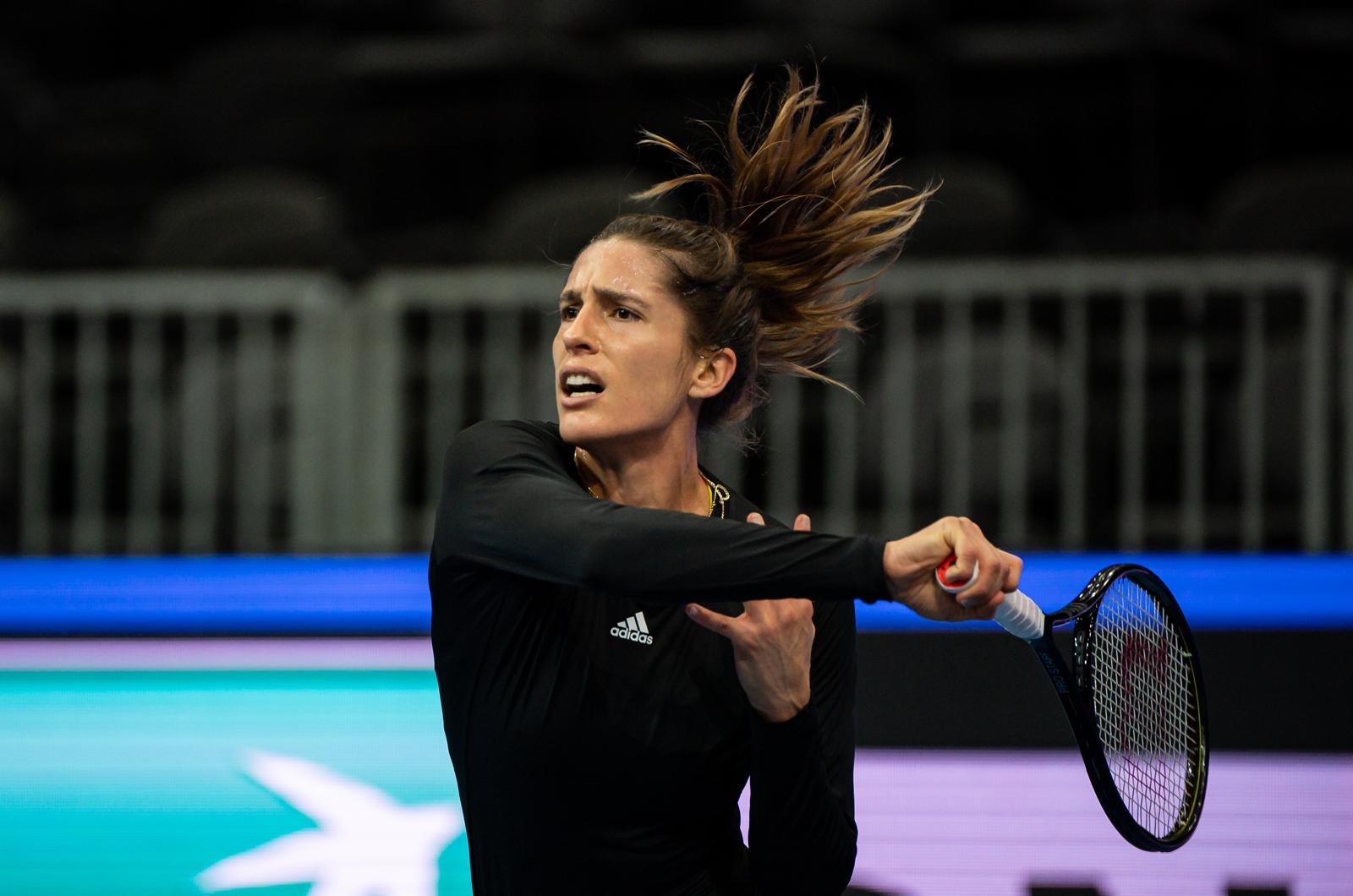
Inner strength, on the other hand, is confidence-adjacent but at the same time a completely different beast. Inner strength is a sense of self. It’s knowing who you are. It’s believing that what you do is meaningful. While it helps if others think that what you do is meaningful, too, if you have inner strength you don’t need them to. It suffices that it’s meaningful to you.
Gertrude Stein was a modernist writer at a time when literature was going through all kinds of transformations from James Joyce to Ernest Hemingway. Even though, she was hailed for her taste and respected by her peers, a writer’s writer if you will, her first commercial success only came when she was 59 years old with The Autobiography of Alice B. Toklas. Did she suffer from not having wide acclaim before? She did and yet she never wavered. For multiple decades, she continued to question punctuation and narrative, classic story-telling and old-fashioned tastes. While some may say The Autobiography of Alice B. Toklas is her most straight-forward book and she eventually did compromise, I would argue that writing a supposed autobiography from the perspective of your life-long partner about essentially yourself is still quite original. She remained true to herself. She had inner strength. Confidence doesn’t sustain, inner strength does.
As I said before, I felt confidence as a tennis player many times. I never felt inner strength. There would always be a nagging question in the back of my mind: are you really a tennis player? Is winning and losing matches really meaningful to you? Is this really what you were meant to do? The answer to these questions didn’t matter but having them be there was enough to undermine myself in a moment of great pressure.
What it feels like to have inner strength about something I do, I experienced much later in life and, interestingly, it came from writing. I was commissioned by the big weekly German newspaper DIE ZEIT to write a piece about Novak Djokovic’s decision to not get vaccinated. This was at the time when he was kept at an immigration hotel in Australia, waiting for news whether he would be able to play the Australian Open or not. I thought about this article for hours and hours, going on frantic walks and reading everything I could about the topic while at the same time working my memory until my head steamed to recall all the details I knew about Novak from when we were mere teenagers. I decided to weigh both sides and spend maybe a third of my text trying to explain Djokovic’s decision from the perspective of somebody who has known Novak from when he was 14 years old. When I had finished the piece, I read and re-read every sentence, every word, every punctuation mark until I had basically memorised the entire essay. And then, I sent it off.
It was published the next day. Over the course of the following week, I got hundreds of messages, emails and letters from people who were furious that I had tried to explain Novak’s decision to not get vaccinated. All of this was happening at the height of the vaccine debate in Germany. I’m usually somebody who is very sensitive to criticism but for some to me absurdly inexplicable reason, not a single email, letter or comment bothered me. They didn’t even make me flinch. I thought about why that was and finally figured it out: I had written the text I had wanted to write. Every sentence, every letter was in exactly the place I had wanted it to be. While it was clearly infuriating to most, it was meaningful to me to add something measured to a frenzied debate.

A few months later, the heat of the moment cooled and people started to weigh decisions that were made during a world-wide pandemic, in an abnormal moment of time, more rationally. I got offered a column at the same newspaper and I wrote it for about four years before I ran out of things to say. I haven’t read the piece in ages and I’m not sure I would agree with everything I said back then today, but I do know that it was an awe-inspiring moment for me personally to experience what true inner strength feels like.
If you think about your favourite tennis players now, with this slight differentiation between confidence and inner strength on your mind, I’m pretty sure you will quickly be able to tell the two types apart. I know I can and unfortunately for me, so could many of my opponents back in the days.
Confidence intimidates, inner strength radiates. And from what I read on the internet, the element Plutonium-239, a highly radioactive isotope, has a half-life of 24,100 years.
Things that make me happy
I had the inner strength to give myself a one-week vacation on my favourite Greek island surrounded by friends and sweet white wine. This person right here was built by Greek salad, watermelon and the sea, the sea.

Things that make me unhappy
Lately, I’ve been quietly obsessed with fragrances. Every day of my life, I try to go to a perfumery and smell scents. My problem is: there are so many! How am I supposed to find a signature scent when there are three trillion different kinds to choose from? That and smelling way too many perfumes in one sitting is giving me a never-ending headache.
One thing I wanted to add about inner strength: You can have inner strength about one thing and completely lack it in another department of your life. It doesn’t really define you as a person. I see it with tennis players all the time. Professional and private lives can and do diverge in the wood and I - I took the one less traveled by.
May you have blue-stained teeth from eating too many blueberries!
Yours truly, Andrea
Very well said. Regarding fragrances, don't bother trying to pin down a signature scent because your taste will change. Instead, find an array of scents that will make you happy in different moods and seasons.
Gaining competency at something builds self esteem. Self esteem means you don't need an outsider's comments to decide if you're on the right path or doing well. Gaining competency requires focusing on improvements and not on weaknesses or failures. "I am better every day, and I'm already fantastic" is the moment to moment attitude that underlays truly solid self esteem. I think that your term inner strength is just such a mindset. In contrast, Confidence is, in fact, fleeting, and can be struck down by a single failure, that failure proving that confidence is falsely present. Thanks for making me think about all this!