
Wimbledon II
The grass is dead, long live the grass.

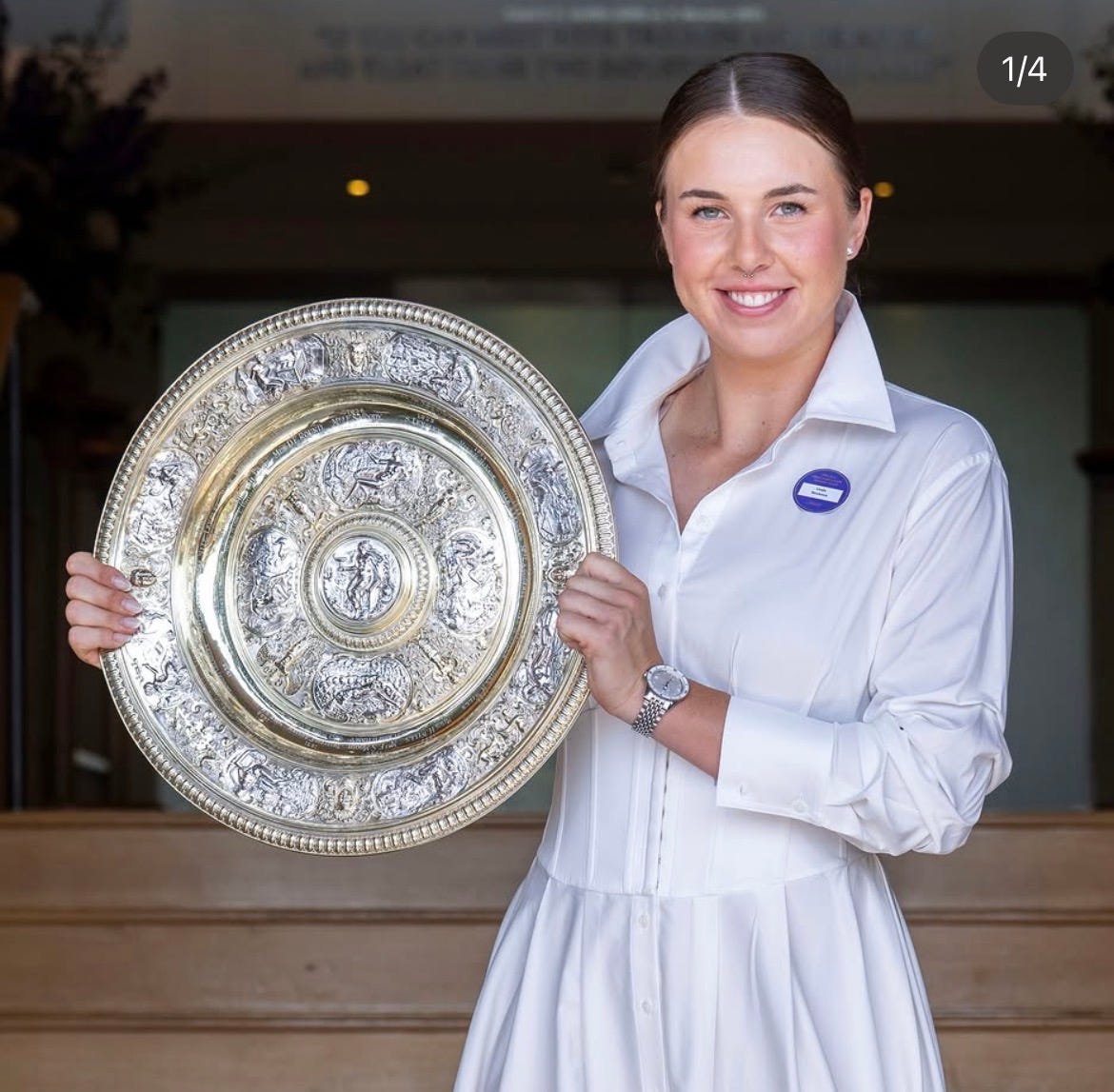
Another fortnight of wonderful tennis comes to an end and the end is ginger-haired and freckle-skinned. Linda Noskova and Jannik Sinner are your Wimbledon champions 2026! All hail! Two different kinds of mental resilience were on display and once more, it’s grass courts that bring forth true strength of character.
Linda Noskova played Karolina Muchova in an all-Czech final and what a final it was. For an hour and eight minutes yawns rang loudly over the roofs of Wimbledon, so stark was the blow-out that was happening in front of our eyes. Linda held a 6:2, 5:2 lead but couldn’t hold her nerve. Karolina, on the other hand, looked a little sluggish at the beginning of the match, a possible aftermath from a dramatic semifinal win against Coco Gauff, but once she held serve at 2:5 down in the second set and saved a bunch of match points, the adrenaline kicked in and suddenly Karolina was wide awake it’s morning. What followed was exactly what everyone hoped for and what the land of Shakespeare longs to offer: High-quality tennis, drama, nerves, tweeners and a winner that not only overcomes the occasion but also herself. What a triumph! Disasters were nowhere to be found.
Linda’s gameplan was surprising but effective. While most players try to keep Karolina in her backhand side, the side that slices and dices but doesn’t hit as many winners as the forehand one, Noskova chose another way and went into Muchova’s forehand early in the rallies. It was a gameplan for Linda, not a gameplan for everyone. Only those who possess the type of power Linda brings to the court can pull it off. She wasn’t afraid of Karolina’s forehand because she trusted that her shots were dominant enough to keep her, Linda, out of trouble. That’s why Muchova looked a little rattled. She couldn’t linger in her backhand side and wait until a forehand opportunity presents itself. Suddenly, she had to protect the other side, too. If you can take away your opponent’s favourite patterns, chances are high that you will make them feel uncomfortable and when players are uncomfortable their decision making becomes compromised.
Karolina eventually adjusted to it and gave us a match, but it was Linda who took the crown. Her mental resilience to win the third set after having squandered five match points in the second was astounding.
Linda lost her mom a couple of years ago. At a very young age, she has already had to experience dark times and loss. The meaning of a tennis match, no matter how important, shrinks in comparison. She was a worthy champion and not an eye in the stadium stayed dry when she acknowledged her mother in her speech.
Things lay a little differently in the men’s final. There were no surprise finalists, instead we had the two top seeds facing each other. Defending champion Jannik Sinner faced first-time finalist Alexander Zverev. While it might have surprised some to see Zverev in the final, an open grass sceptic, it didn’t surprise those who had seen him play a lot over the last few months. At the end of 2025, Zverev approached his team and told them that he needed to change things. He felt like Jannik and Carlos had not only passed him but month in month out were steering further and further away. Zverev revamped his game and his forehand (hitting through the ball more rather than brushing up on it), started to attack the net more frequently, forced himself to stay closer to the baseline and eventually won his first major title at the French Open. Consequently, he ended up playing the best Wimbledon of his life.
Unfortunately for him, he faced an opponent on the other side who truly was a man on a mission. After the first point in the match, Jannik’s fist was up, and a glance of menacing determination was aimed right at me… is what I thought. I then realised that I was seated right under Jannik’s player’s box. I lifted my head and noticed everyone standing with their fists raised in return. This was after the very first point in the match. For the next three hours and 45 minutes, the exact same energy wafted over the court from box to player and back (all of that with me in the middle, staring at my shoes).
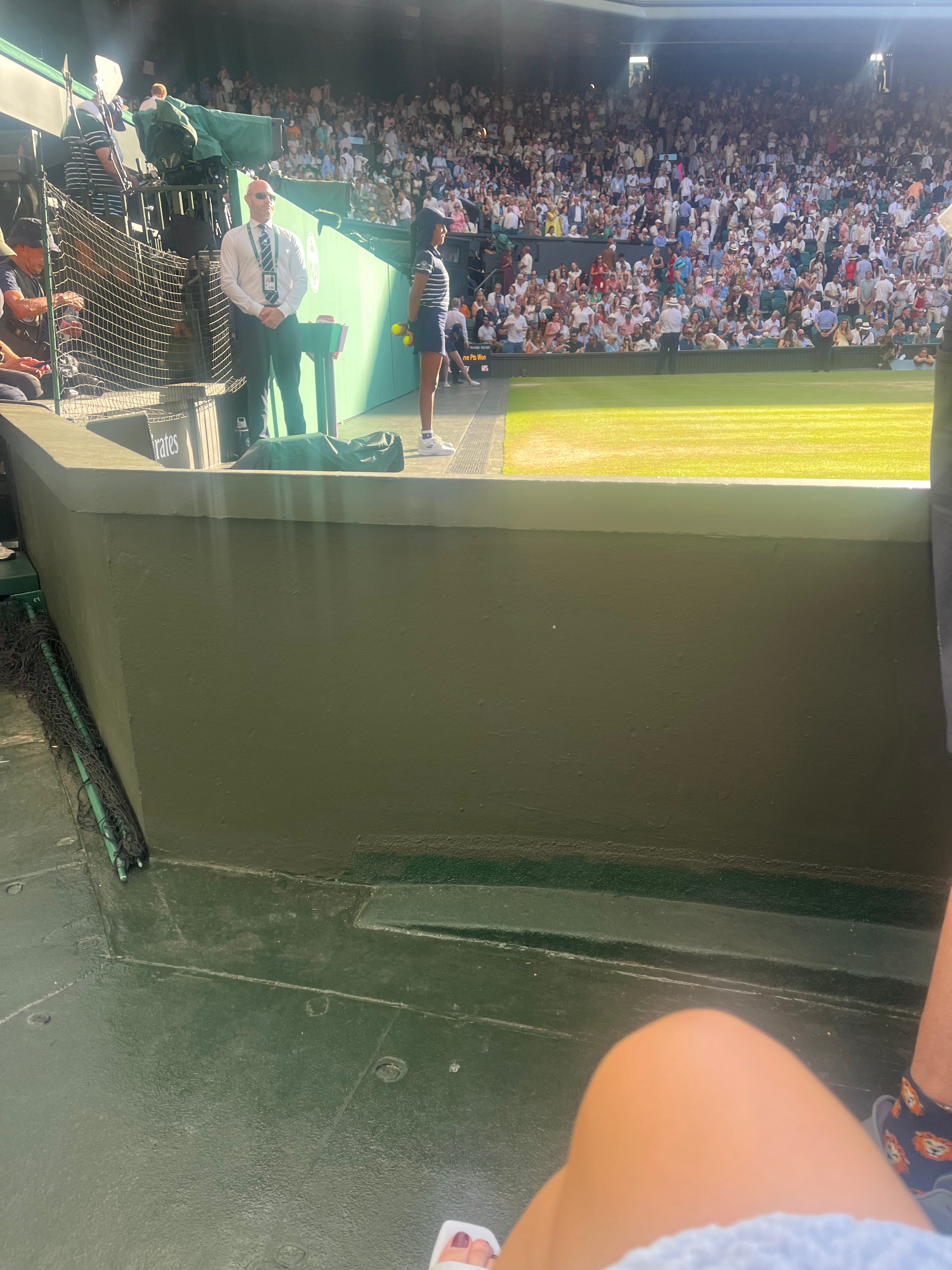
While the first two sets were incredibly close and could’ve gone either way - interestingly, sitting courtside it felt like Sinner was better in the (few) neutral rallies in set one, but he ended up losing the tie break, and it was the other way around in set two – one thing happened just before the third set. The temperature dropped by about four degrees Celsius. It slowed the game down and Jannik started to get a lot more returns in the court. Once he had more rallies to contest, he gained confidence in his forehand and started hitting it around five kilometres per hour quicker. Which in turn had Zverev struggling for time and position and from there on the match never again seemed to be in danger for the Italian. It’s funny how little things in tennis can make a huge difference.
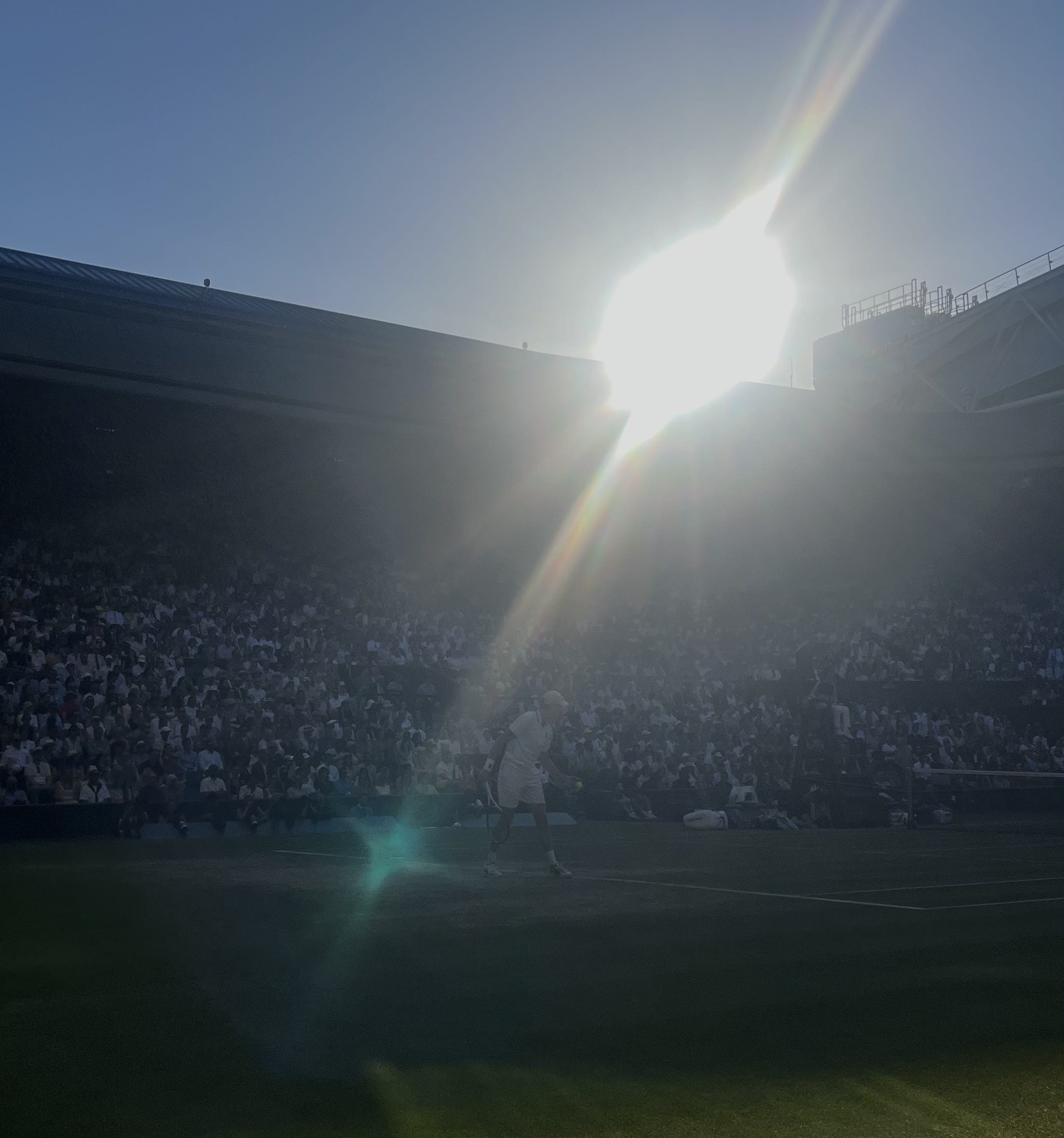
Having followed Jannik closely ever since he was about 17 years old, this Wimbledon title feels like a quantum leap in his maturity process. It is the first time I can think of where Jannik won a big tournament having started, it’s crazy to write, average. Every other tournament Jannik has ever won, he looked like the player to beat from the first point of his first match. Beware to the rest, if he’s now figured out how to win titles when not playing his best from the get-go!
I asked him about that after the final and he agreed with me on first thought. Maybe he just agreed because he felt bad for having given me mean face for three hours 45. But maybe, he really did agree.
Whereas last year, Jannik looked – for the standard of his poker face – almost ecstatic after his Wimbledon win, this year, he looked tired and relieved. There was a huge weight on his tiny, white shoulders of not having performed the way he would’ve liked to at Slam tournaments.
Well, that’s done. Complimenti, Jannik, you not only defended your Wimbledon title, but you also did it during a heat wave in London. I raise my glass of Gewürztraminer to you!
Things that make me happy
Even for a veteran of many years on tour, playing and reporting, there are certain things that are breathtakingly special to behold. The silence before a point is played on Wimbledon Centre Court is one these things. Five seconds prior, you will hear chatter going through the stands, but the moment one of the players sets up to serve, a bone-chilling silence falls suddenly and forcefully. It gives me goosebumps just thinking of it.
Things that make me unhappy
The match point Coco Gauff missed in the Wimbledon semifinal against Karolina Muchova. She serves beautifully, gets a short ball and decides to play a drop shot which lands well in the net. It’s not that she made that decision or how she executed that makes me unhappy. Things like this happen in tennis all the time, it’s just unfortunate for her that it happened in such a big match. But it’s the fact that I know that for at least a week, every time she tries to go to sleep, that image of herself attempting the drop shot will appear out of nowhere in front of her inner eye and haunt her until she eventually - out of sheer exhaustion - falls asleep. Been there, done that, never again, thank you very much.
Thank you for beautiful moments, Wimbledon, for words like fortnight that henceforth will not be used again until next year, for summertime strawberries with runny cream, for grass so pristine it makes me sneeze. See you all next time, may the silence be deafening.
Yours truly, Andrea
I think it was the great Lew Hoad who, when asked how he beat players with bigger weapons than he had, said: Attack the other player's favorite and best shot, repeatedly, until it breaks down due to fatigue and disbelief. Exactly as you observed Linda doing. Wonderful insightful dissection of complex and beautiful game. Love you!
There are not many things in sports that are as hard as to play your own match point in Wimbledon, except one thing: losing five match points, losing a set and coming back to win a third set. That is the ultimate mental resilience on display. Thank you Andrea..