
Indian Wells
Of comebacks, finding the right balance and more

It has been that time of year again. A pinch of desert, a tablespoon of heat and heaps of sparsely dressed, sweaty men and women or as business insiders call it: Coachella. Hold on, I got ahead of myself, the desert sun has been blinding. We’re still at the tennis (even though everyone talks about golf all the time) and victory’s still up for grabs.
There are so many storylines I could dive into but confronted with the daunting task of the white page, I decided to focus on two specific things, one on the men’s side and one on the women’s, before I abolish this newsletter instantaneously due to the overwhelming state of being overwhelmed. Here we go.
Women - defend to attack, attack to defend
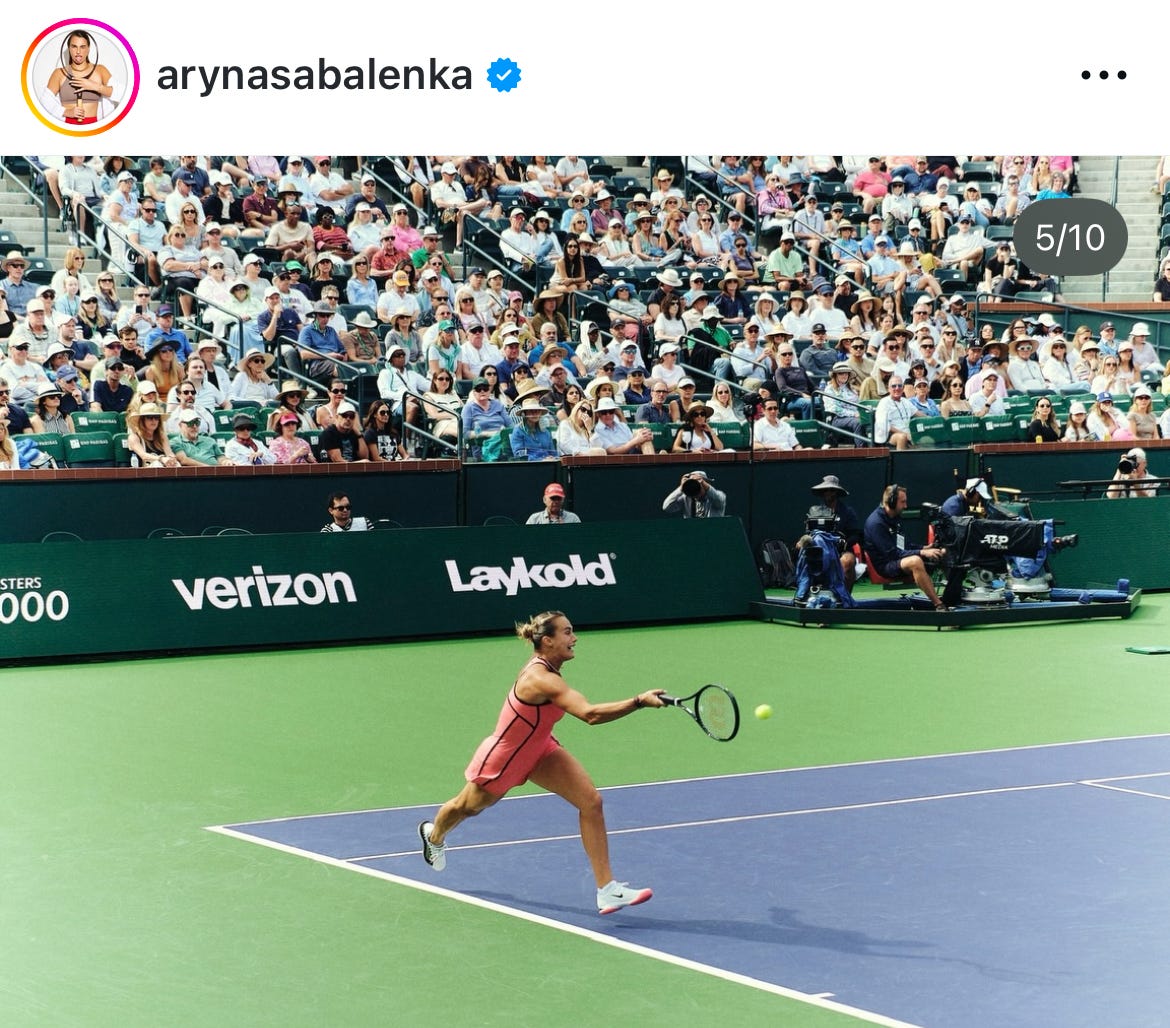
Having watched a lot of the women’s matches this past week has made me realise how far women’s tennis, particularly in the very top, has come. Every single player that has made themselves a fixture at the latter stages of tournaments consistently, Aryna Sabalenka, Iga Swiatek, Victoria Mboko, Jessica Pegula, Elina Svitolina, Elena Rybakina (even players like Karolina Muchova and Iva Jovic), has mastered both defence and offence - and the switch from one to the other. One might lean more offensive (Sabalenka), another will lean more the other way (Svitolina) but all of these players mentioned above are capable to do both when needed.
I’m putting Rybakina on this list because she has improved her footwork in astonishing fashion over the last six months or so but I quietly think of her and Amanda Anisimova separately if I’m completely honest. Elena’s and Amanda’s weapons are so big that their defence department can be ignored at times. When they hit their spots and play well, they don’t need to defend.
Even so, if you compare them to Aryna Sabalenka, another big hitter, you will notice that Aryna is the most consistent of the three. Her ability to defend and to turn defence into offence has separated the world number one from everybody else for more than two years now. Which doesn’t mean that Anisimova and Rybakina can’t beat Sabalenka on any given day but it does mean that you will see Amanda and Elena lose in earlier rounds every now and then - and you will rarely ever see that with Aryna.
Rybakina, though, is on a scary good path and might make these words obsolete in a matter of weeks.
This crux of this is a bit more obvious with Anisimova: She has struggled with her serve and hasn’t quite found her best this season yet. Her defensive game is still a work in progress, so when a shot like the serve is not working as well as it was last year, she struggles just a bit more than somebody else might who has more defensive qualities.
Iga Swiatek and Coco Gauff have been interesting cases as well, haven’t they? Whereas Aryna Sabalenka and Elena Rybakina have been improving their defences for the past years, Swiatek and Gauff, in different ways, have tried to build the attacking parts of their game.
For Swiatek, it’s the serve she has been working on for over two years now in order to get more free points from it in decisive moments. For Gauff, it’s been the forehand and her willingness to add to her tremendous retrieving abilities (serve as well, of course, but that is more of a technical process rather than a game style question).
In a way, it’s harder for them because they are so good at both attacking and defending. Elena and Aryna know that their A games will always be first-strike-tennis. The improved defensive abilities come into play when they are off their A game. Coco and Iga can start any given match on any given day as nearly two different players. They can win 90% of their matches by just defending and they can win 90% of their matches by solely attacking. They are, however, at their best when they find the balance between the two. It’s like finding the right amount of salt for a dish you cook often. Sometimes it’s a pinch and other times you need more.
Without fail, the sport of tennis has asked its athletes to do both: Defend and attack. Right now though, with how strong the top of women’s tennis is, there is so much less room to not get it exactly right. Just like that amount of salt in your favourite dish.
It’s an exciting time for women’s tennis.
Men - Comebacks, hairlines and more
The thing that has been fascinating on the men’s side to me is the amount of stunning comebacks from injury and/or lack of form. I’m thinking of Jack Draper and Arthur Fils, of course, but I also have Daniil Medvedev and Cameron Norrie in mind. Draper and Fils have come back from serious injuries that took them out of the tennis world for months and months while Medvedev and Norrie dropped off their best ranking for a while and have recently slowly and steadily made their way back.
How have they done it?
We have a synonym for injury in German sports journalism: Zwangspause. The English translation is mandatory break. In the sport of tennis where the longest break one can get on a voluntary basis is four weeks at the end of the season a mandatory break can be turned from woe to wow if the player in question meets a few requirements.
They have to be young.
They have to be mentally resilient.
They have to be willing to change.
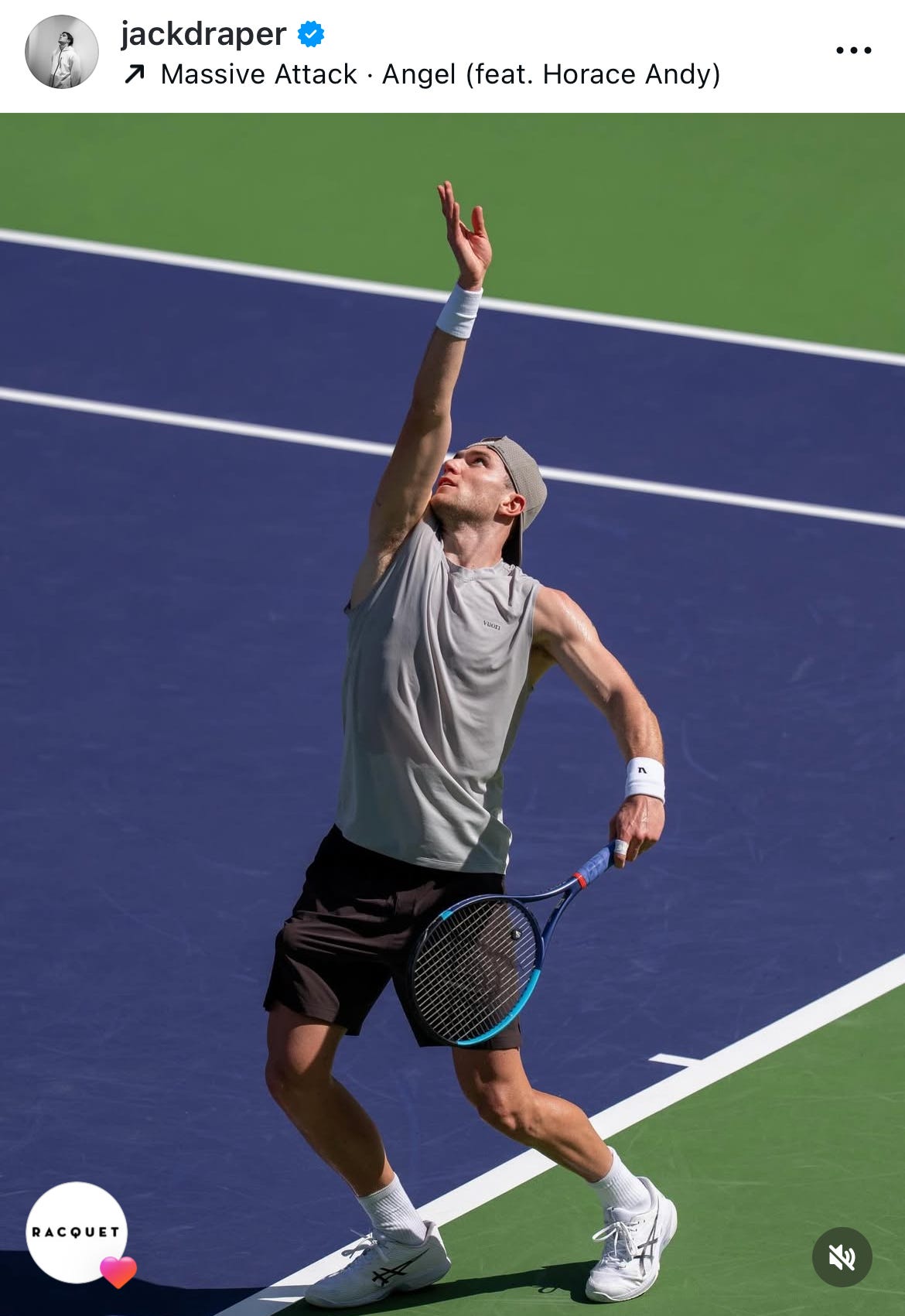
I’m not saying older players who get injured can’t make the best of it, naturally they can. But recovery becomes much harder the older the athlete is. Both Jack and Arthur stared their injury square in the face and said: Ok, if this is how we play, we will play. Jack has changed his service motion, he has seemingly gained a few pounds of muscle mass and is equipped with a new coach. Arthur’s backhand looks a lot more stable than before his injury and he, too, has made a new addition to his team in Goran Ivanisevic. Those are all things we can see and measure and count on the court.
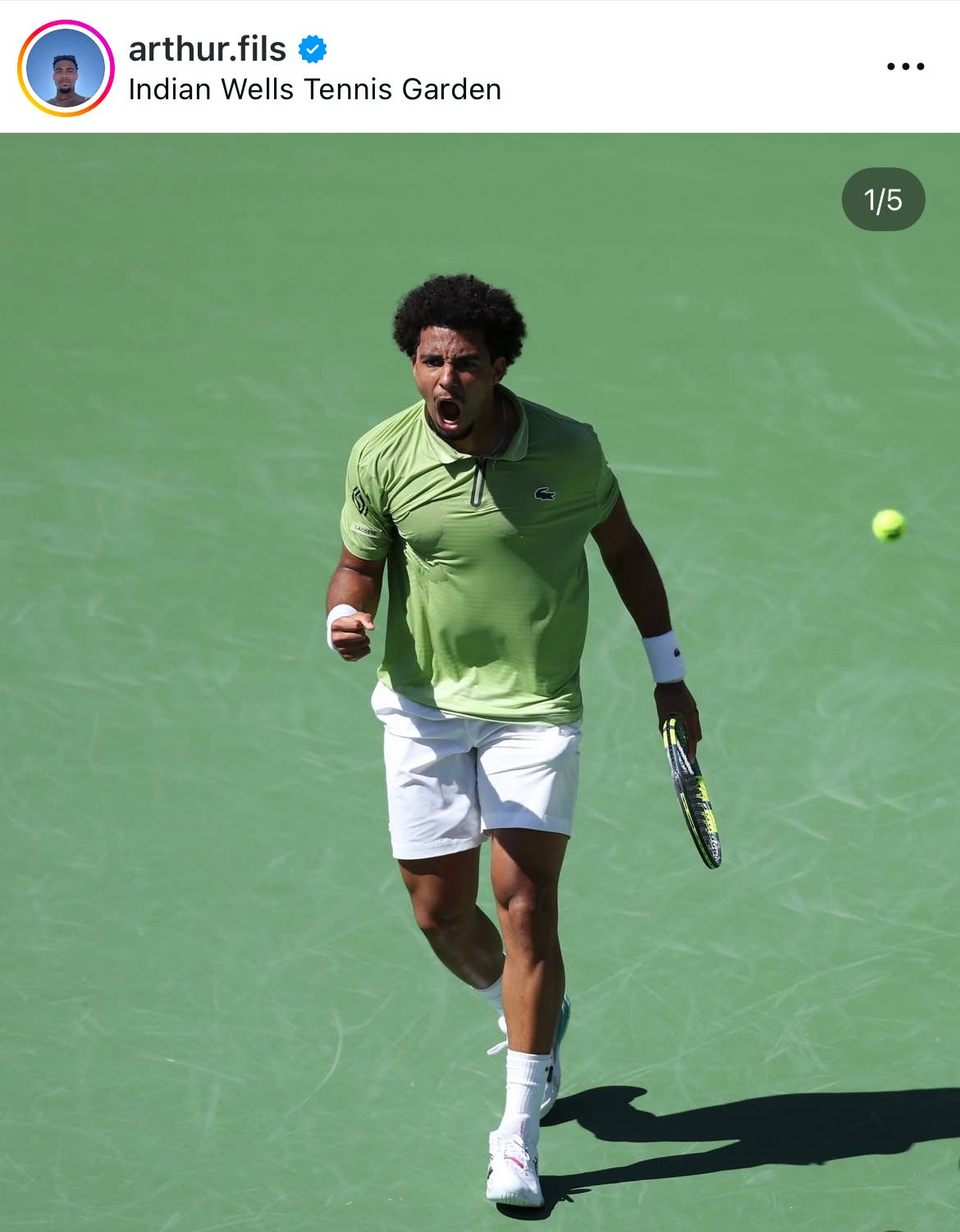
The intangibles, however, are maybe the more important ones. How much have they grown as a person? How much more appreciative are they of their health and the tennis tour and the competition? These are factors that can make a difference in a young man.
When The Athletic asked Jack Draper about his new hairstyle, Jack said: “It’s not the greatest in the world. I thought I had a bit of a better hairline than I do. But at the same time, it’s a bit of a fresh start.”
That’s the kind of secure masculinity we need more of in this world.
The one thing you cannot emulate on the practice court is the tension that hits your body when the chair umpire says time. Arthur and Jack will need a few weeks to adjust to the competitive juices that flow through your body when you become convinced that the most important thing in the world is for you to win this match. But they are already in fierce competition with each other with regards to comeback of the year.
May they share the trophy in the end.
Daniil Medvedev and Cameron Norrie have managed a different kind of comeback that is as praiseworthy as Draper’s and Fils’. They have come back from falling off the rankings - and in tennis ranking means relevance, means money, means self-worth - to fight their way back close to the top. Both Daniil and Cameron have felt the Alcaraz/Sinner effect on their games more than others. With the emergence of these two champions, tennis has gotten faster, more aggressive and more athletic. The king of adaptability Novak Djokovic was quick to react and he now hits his forehand bigger than ever. Hence why he’s able to stay on top despite playing fewer tournaments.
It took Daniil and Cameron a little while longer. But you could see them: Trying to be more aggressive, forcing themselves to be closer to the baseline, working on their serves, getting to the net more often. And lately, it seems to have clicked. Cameron Norrie is projected to be ranked 24 after Indian Wells and Daniil Medvedev will break back into the TOP 10 if he continues on this more aggressive path. To be fair, both players have also struggled with some injuries that made it harder for them to practice as much so maybe that’s why everything took longer than they would’ve liked.
Either way, transition periods are hard and sometimes they cost players not only losses but plenty of nerves and a good amount of confidence. Norrie and Medvedev remained patient, took their time and are clearly on their way back to their best, improved tennis.
And here is where I tie it back to the women. It has always been easier for a naturally aggressive player to add defence to their game than the other way around. So, if your favourite player is in a period of change/improvement/shakiness - give them some time. They might come out stronger.
P.S. I think Jack was right in the hindrance call and he argued his case in an elegant and level-headed manner which doesn’t mean that Daniil was necessarily wrong, it just means that tennis (and life) is complicated and we can only try to face it in the same prudent way Jack Draper did.
Things that make me happy
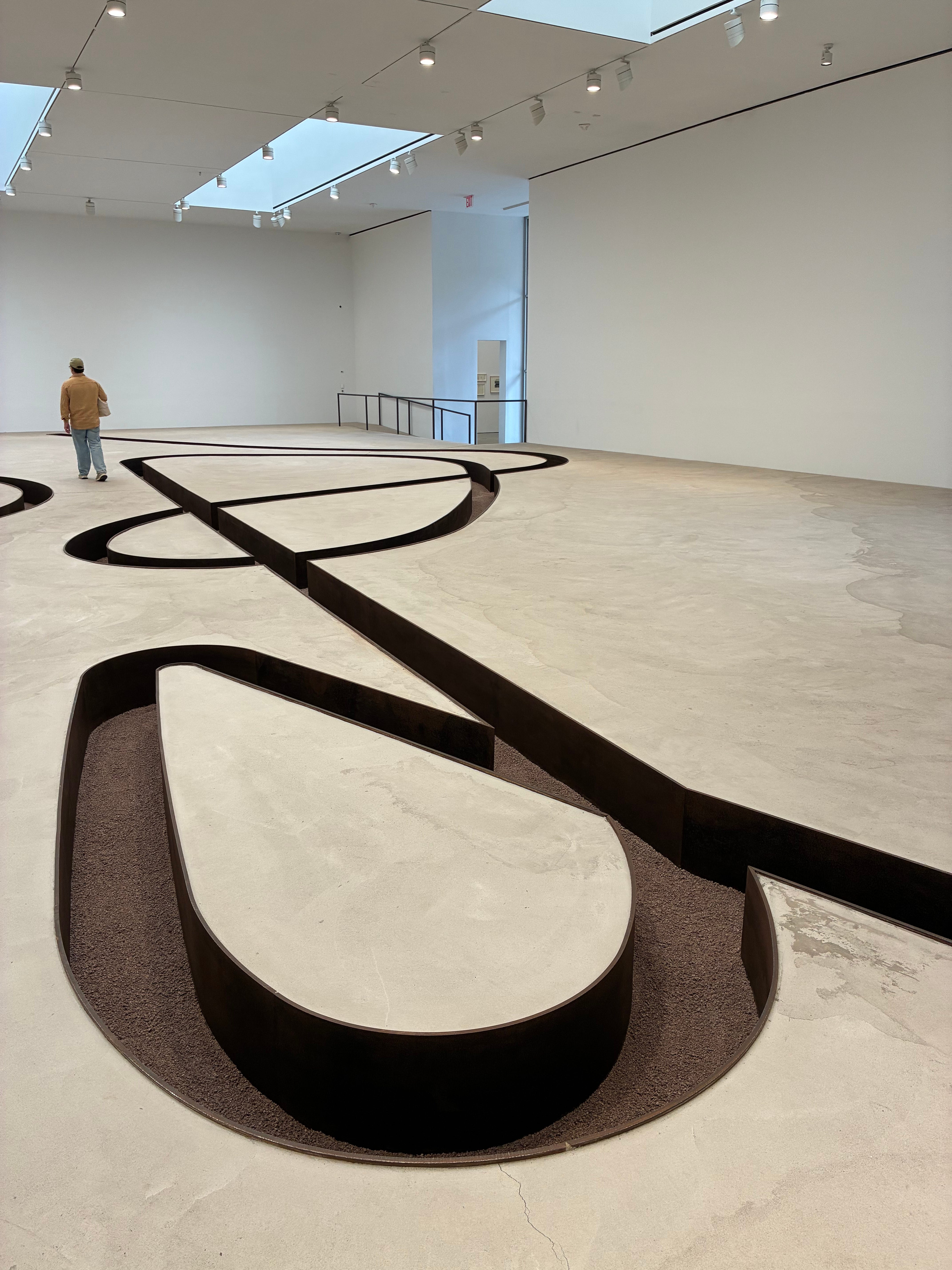
I did some gallery hopping in Chelsea with a friend a couple of days ago and there are many cool things out there right now. A lot of optical illusions and works with light sculptures. I really liked the work of Chilean artist Ivan Navarro in the Templon gallery, Louise Bourgeouis is currently featured at Hauser & Wirth but my favourite was the Michael Heizer sculpture at the Gagosian which was embedded into the floor.
Things that make me unhappy
New York City tricked us into believing winter is over with three beautiful spring days just to punish us 24 hours later with an entire day of hail-rain-snow. Rough winds do shake the darling buds of March.
I’m so glad you all liked my very strict guideline on how to pull a tennis player last week! The theoretical foundation has been laid and I can’t wait to hear how these tips fare in practice for some of you. Indulge us. May you have mango ice-cream on the weekend.
Yours truly, Andrea
Another awesome column Andrea, thank you! And you’ll be pleased to know the disgusting humidity blanket here in Sydney has finally lifted into a pleasant warm autumn.
The more I try to understand what is happening in the world the more I enjoy your tennis commentary